CONFERNCE UPDATE: ACC 2026
The Ez-PAVE trial: Intensive LDL-C targeting reduces 3-year CV events in ASCVD patients


STUDY DESIGN
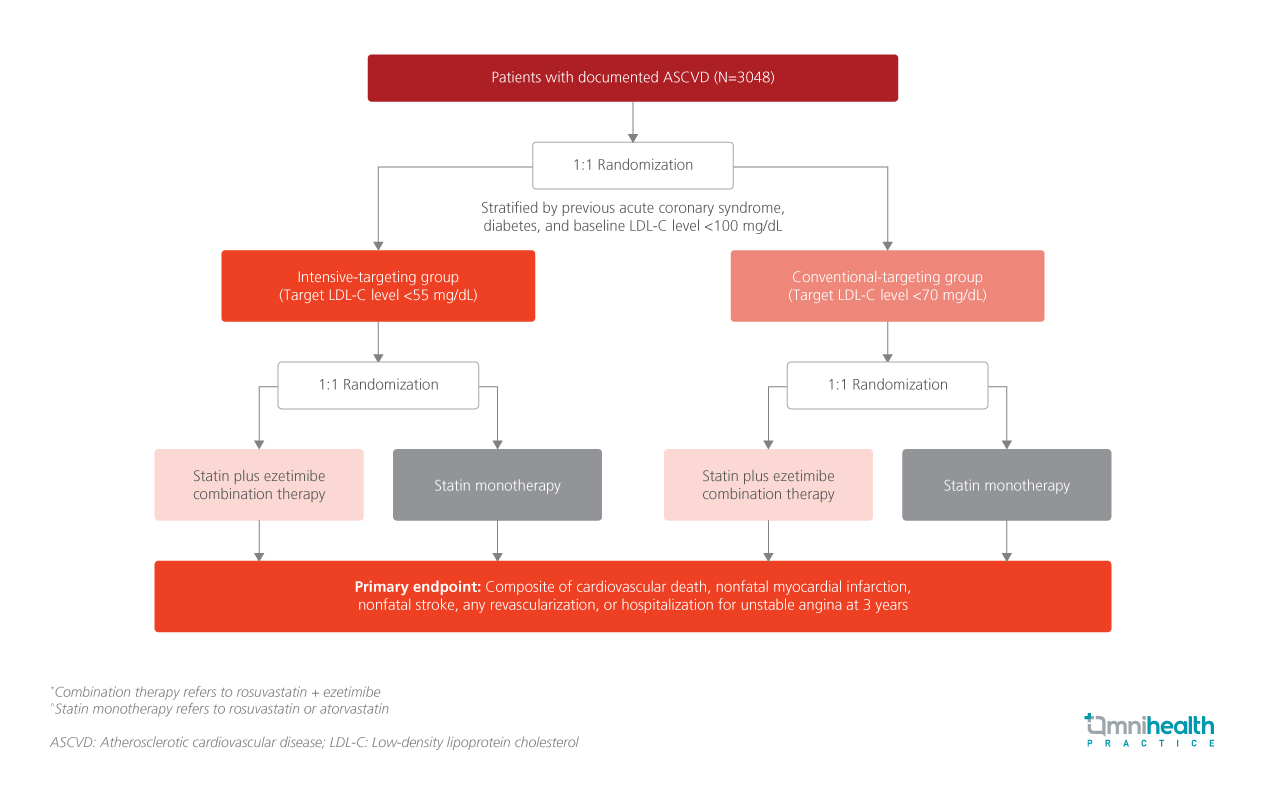
Recent guidelines recommend more aggressive low-density lipoprotein cholesterol (LDL-C) targets from 70mg/dL to <55mg/dL in patients with atherosclerotic cardiovascular disease (ASCVD) despite historically limited evidence supporting this threshold.1 The Ez-PAVE trial is a multicenter, randomized, open-label study designed to evaluate whether intensive LDL-C targeting (<55mg/dL) is superior to conventional targeting (<70mg/dL) in preventing cardiovascular events in patients with ASCVD.1
A total of 3,048 patients aged 19-80 years with documented ASCVD were enrolled across 17 sites in South Korea.1 ASCVD was defined as the presence of at least one of the following: previous acute coronary syndrome (ACS), stable angina with imaging or functional evidence, prior coronary or other arterial revascularization, stroke or transient ischemic attack (TIA), or peripheral artery disease (PAD).1 Patients were randomized 1:1 to intensive or conventional LDL-C target groups.1 Following randomization, patients in each group were further assigned in a 1:1 ratio to receive either statin monotherapy (rosuvastatin or atorvastatin, allocated in a 1:1 ratio) or statin + ezetimibe combination therapy (rosuvastatin + ezetimibe).1 Lipid-lowering therapy was subsequently titrated to achieve the assigned LDL-C targets, with statin up-titration and addition of ezetimibe recommended prior to initiation of proprotein convertase subtilisin/kexin type 9 (PCSK9) inhibitors.1
Baseline characteristics were well-balanced between the two groups, with a mean age of approximately 64 years, and 79% were male.1 Clinical presentations were comparable, including similar proportions of prior ACS, stable angina, previous revascularization, stroke/TIA and PAD.1 Comorbidities, such as diabetes and chronic kidney disease, were also evenly distributed.1 Median baseline LDL-C levels were similar between groups at 75mg/dL-77mg/dL.1
The primary endpoint was the composite of cardiovascular (CV) death, nonfatal myocardial infarction (MI), nonfatal stroke, any revascularization, or hospitalization for unstable angina at 3 years.1 Key secondary endpoints included individual components of the primary endpoint and prespecified composite outcomes.1 Safety endpoints evaluated new-onset diabetes, worsening of glycemic control, statin-associated muscle symptoms leading to changes in therapy dose or regimen, cancer diagnosis, cataract surgery, aminotransferase elevation, creatine kinase elevation, and creatinine elevation.1
FINDINGS
|
Primary endpoint: |
|
|
Secondary endpoints |
|
|
Safety endpoints: |
|
“Intensive LDL-C targeting <55mg/dL reduced 3-year CV events compared with conventional targeting <70mg/dL, supporting more intensive lipid-lowering strategies for secondary prevention in patients with ASCVD, in line with current guideline recommendations.”
Dr. Byeong-Keuk Kim
Severance Hospital, Yonsei University College of Medicine,
South Korea