MEETING HIGHLIGHT
Closing the CKD care gap: Transforming patient trajectories with early dapagliflozin and targeted complication management


Chronic kidney disease (CKD) affects about 1 in 10 people worldwide.1 It significantly increases the risk of kidney failure and heart failure, leading to frequent hospitalizations.1 CKD is intricately linked to the global surge in CV and metabolic conditions, with up to 42.1% of cases driven by type 2 diabetes (T2D).2 Historically, clinical management for these patients heavily prioritized glycemic control, but as Professor David Wheeler from University College London emphasized at the recent Hong Kong Medical Forum, a purely glucocentric approach is insufficient to preserve long-term kidney function.3 Once nephrons are destroyed, the resulting loss of kidney function cannot be regained.4 Therefore, the paradigm of CKD care must urgently shift from reactive treatment to proactive, early intervention.4 By detecting early markers like albuminuria and leveraging transformative therapies such as sodium-glucose cotransporter-2 inhibitors (SGLT2is) and novel anemia treatments, clinicians can definitively alter the disease trajectory before irreversible damage occurs.4-7
The golden window: Targeting albuminuria before eGFR declines
Diagnosing CKD requires objective quantification of both estimated glomerular filtration rate (eGFR) and the urine albumin-to-creatinine ratio (UACR).5 According to KDIGO guidelines, CKD is established by either two eGFR measurements below 60mL/min/1.73m2 taken at least three months apart, or a normal eGFR accompanied by two elevated UACR readings ≥3mg/mmol over a similar three-month interval.5 Prof. Wheeler remarked that, unfortunately, in routine clinical practice, UACR is frequently omitted, resulting in delayed therapeutic intervention. A patient can maintain a completely normal eGFR (≥90mL/min/1.73m2) yet still face a profoundly increased risk of kidney failure and cardiovascular (CV) events if they have elevated albuminuria (category A2 or A3) (table 1).5
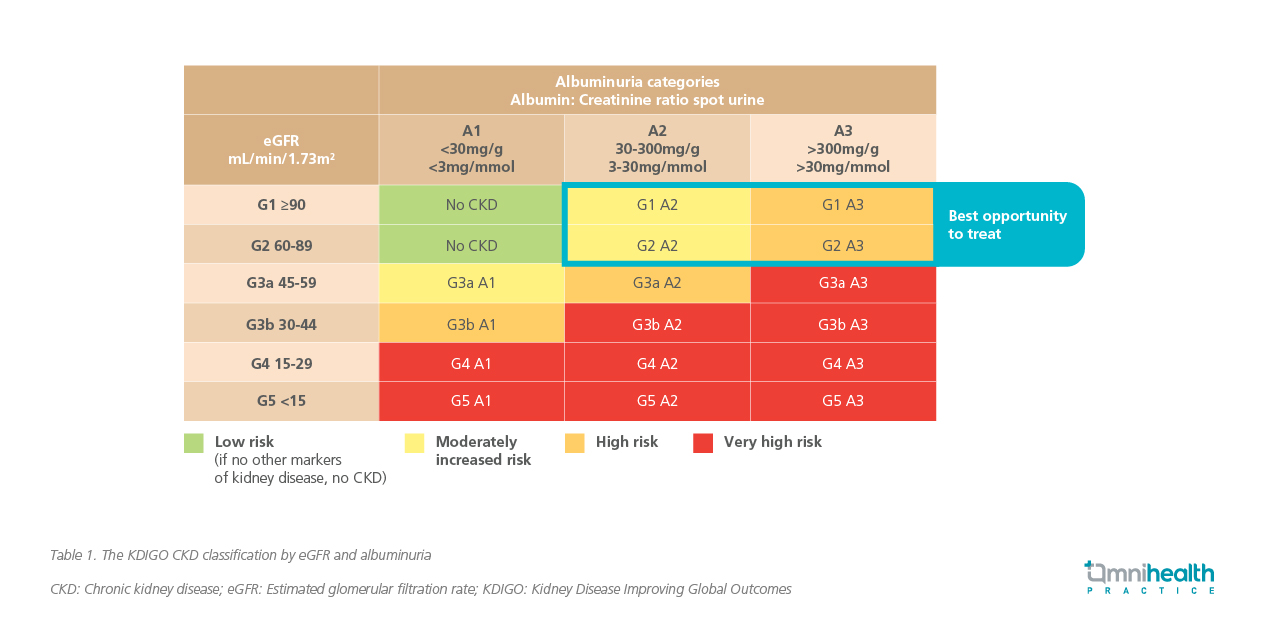
The underlying pathophysiology is clear: early in the disease process, podocyte injury leads to the leakage of albumin into the urine.8 Prof. Wheeler emphasized that “This specific stage, when UACR is elevated but eGFR has not yet steeply declined, is the absolute best opportunity to treat the patient, and that waiting for a precipitous decline in eGFR means delaying intervention until permanent, irreversible structural scarring has already occurred.” Identifying early endothelial and podocyte dysfunction provides the critical lead time necessary to preserve nephron mass.8
Beyond glucose control: The foundational role of SGLT2is
The introduction of SGLT2is has shifted the management of CKD from controlling risk factors to active disease modification. Prof. Wheeler outlined a framework wherein SGLT2is serve as a primary pillar of cardiorenal protection alongside renin-angiotensin-aldosterone system (RAAS) blockade, with the addition of finerenone, and glucagon-like peptide-1 receptor agonists (GLP-1RAs) for patients suffering from diabetic kidney disease (DKD) as well.
The landmark DAPA-CKD trial evaluated dapagliflozin in patients with CKD, demonstrating comprehensive protection, showing a profound reduction in the primary composite outcome (sustained ≥50% eGFR decline, end-stage kidney disease (ESKD), or renal/CV death).9 Dapagliflozin significantly reduced the primary composite outcome vs. placebo (HR=0.61; 95% CI: 0.51-0.72; p<0.001), with consistent benefit across key secondary outcomes including the renal-specific composite (HR=0.56; 95% CI: 0.45-0.68; p<0.001), CV death or heart failure hospitalization (HR=0.71; 95% CI: 0.55-0.92; p=0.009), and all-cause mortality (HR=0.69; 95% CI: 0.53-0.88; p=0.004), indicating robust kidney and CV protection in CKD patients irrespective of diabetes status.9 By prioritizing the integration of dapagliflozin into standard care, clinicians can significantly delay the progression to ESKD and mitigate associated CV mortality.
Crucially, this protective divergence was observed in patients with T2D (HR=0.64; 95% CI: 0.52-0.79) and identically matched in patients without T2D (HR=0.50; 95% CI: 0.35-0.72), proving the drug's mechanism extends beyond systemic glucose-lowering pathways.9
Prof. Wheeler reminded clinicians that when initiating kidney-protective therapies like dapagliflozin, an acute “dip” in eGFR, an initial drop of approximately 3-4mL/min/1.73m2 within the first few weeks, is commonly observed.9 He reassured that rather than a sign of harm, this dip reflects a beneficial hemodynamic reset that reduces intraglomerular pressure.9 Following this initial recalibration, the long-term chronic eGFR slope flattens significantly, preserving long-term kidney function.9
Real-world evidence: Dapagliflozin's efficacy across UACR levels
While clinical trials establish efficacy, they often employ restrictive inclusion criteria, such as requiring advanced albuminuria (UACR >200mg/g), to ensure sufficient statistical event rates.9 This historically left a gap in real-world evidence regarding how patients with lower baseline albuminuria might benefit.1
The observational OPTIMISE-CKD study bridged this gap using robust real-world claims data from the United States, evaluating patients with CKD without T2D who initiated dapagliflozin 10mg. Patients were stratified into low UACR (30-200mg/g) and high UACR (>200mg/g) groups.1 An acute eGFR dip of ~3mL/min/1.73m² was followed by stable kidney function over 12 months, with comparable eGFR slopes between albuminuria groups: 0.79mL/min/1.73m²/year (95% CI: -0.59 to 2.56) in low UACR vs. 0.40mL/min/1.73m2/year (95% CI: -0.46 to 1.38) (figure 1).1 Cardiorenal outcomes were similar across UACR strata, with adjusted hazard ratios for high vs. low UACR of 0.89 (95% CI: 0.66-1.19) for cardiorenal hospitalization and 1.10 (95% CI: 0.63-1.92) for all-cause mortality, and similar findings using stricter definitions (HR=0.96; 95% CI: 0.59-1.56).1 Event rates were broadly comparable with 30.6 vs 22.2 per 100 patient-years for cardiorenal events in low vs high UACR, and results remained consistent when including patients with normal/mild albuminuria and in those with diabetes (figure 2).1
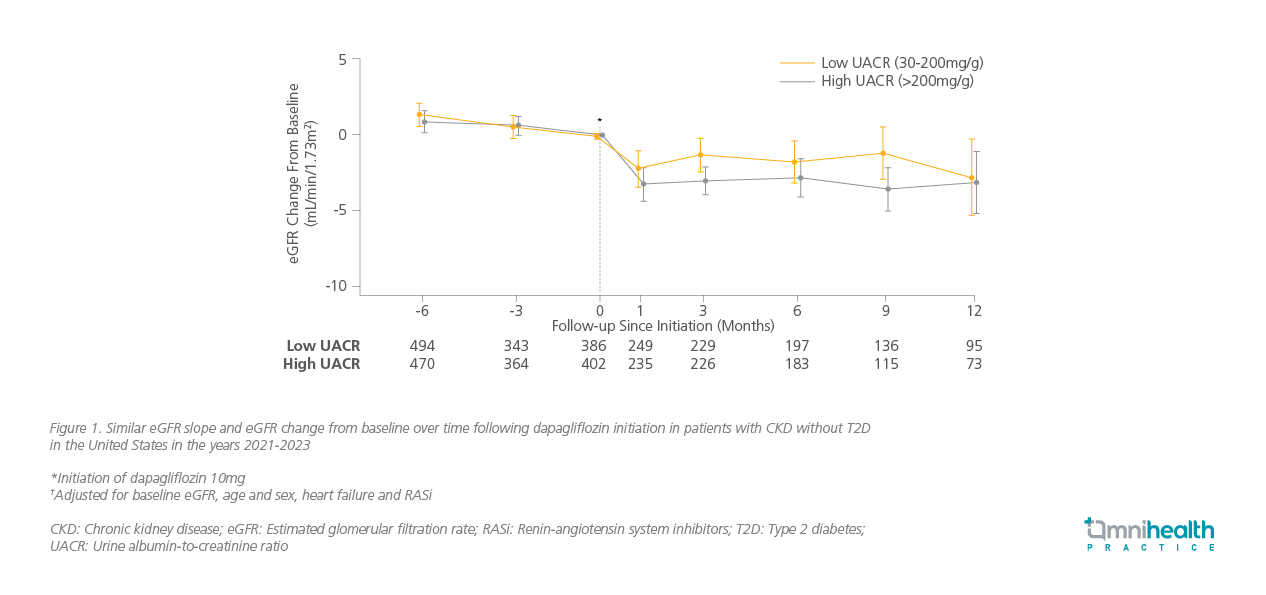
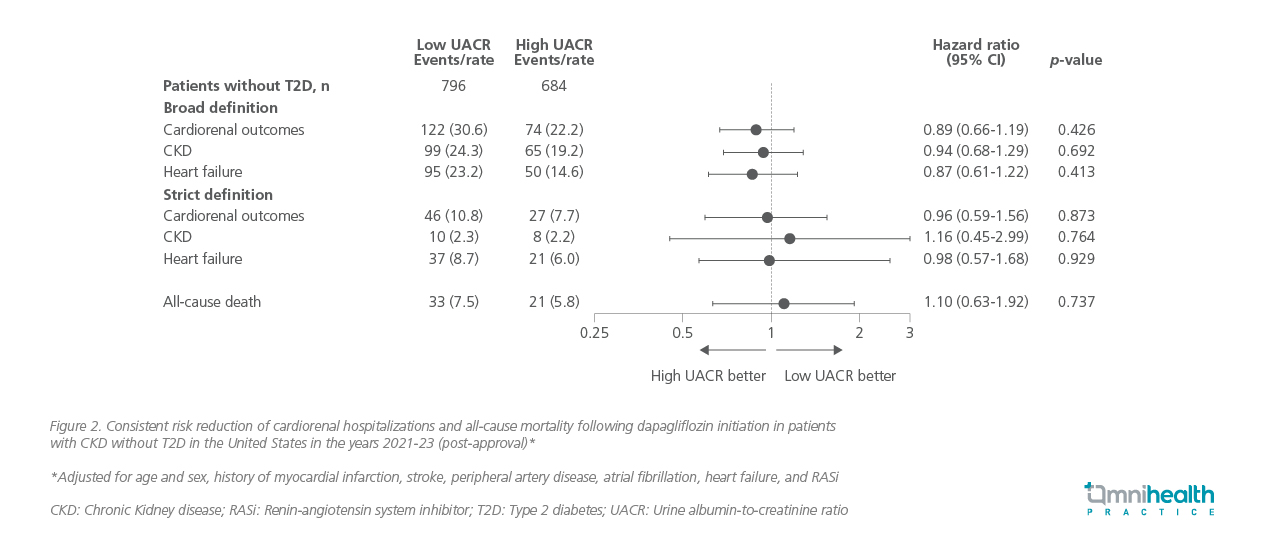
The OPTIMISE-CKD data confirm that the cardiorenal and mortality benefits of dapagliflozin remain robust and consistent regardless of the patient's baseline UACR level.1 Therefore, Prof. Wheeler reinforced that clinicians should not delay SGLT2i initiation until albuminuria reaches severe levels, and that early initiation provides critical nephroprotection across the disease spectrum.
Managing complications: The role of HIF-PHIs in renal anemia
As CKD advances, systemic complications become increasingly prevalent.10 One of the most debilitating complications is renal anemia, driven primarily by the failing kidneys' inadequate production of erythropoietin (EPO).10 Anemia is an established complication of progressive CKD.7 While standard diagnostic definitions span broader hemoglobin ranges, a threshold below 10g/dL typically serves as the operational trigger for advanced therapeutic intervention.7
In non-dialysis-dependent CKD patients, anemia is often undertreated due to delayed referral to specialists and concerns about the safety of erythropoiesis-stimulating agents (ESAs).7 Effective treatment of anemia has been shown to reduce the need for blood transfusions and improve overall outcomes.7 In contrast, inadequate treatment is associated with higher rates of hospitalization, transfusion, and mortality.7
The current decade has marked the clinical integration of a novel therapeutic class: hypoxia-inducible factor prolyl hydroxylase inhibitors (HIF-PHIs).7,11 Unlike ESAs which are administered parenterally, roxadustat treats renal anemia orally offering convenience in clinically challenging scenarios.12 Roxadustat triggers a coordinated, physiological response to simulated hypoxia.7,11 In normal conditions, the prolyl hydroxylase enzyme actively degrades HIF.7,11 Roxadustat inhibits this enzyme, stabilizing HIF and allowing it to translocate to the nucleus to induce target gene expression.7,11 Once active, HIF prompts both the kidneys and liver to increase endogenous production of EPO while downregulating hepcidin, a key mediator of chronic inflammation that typically sequesters iron stores.7,11
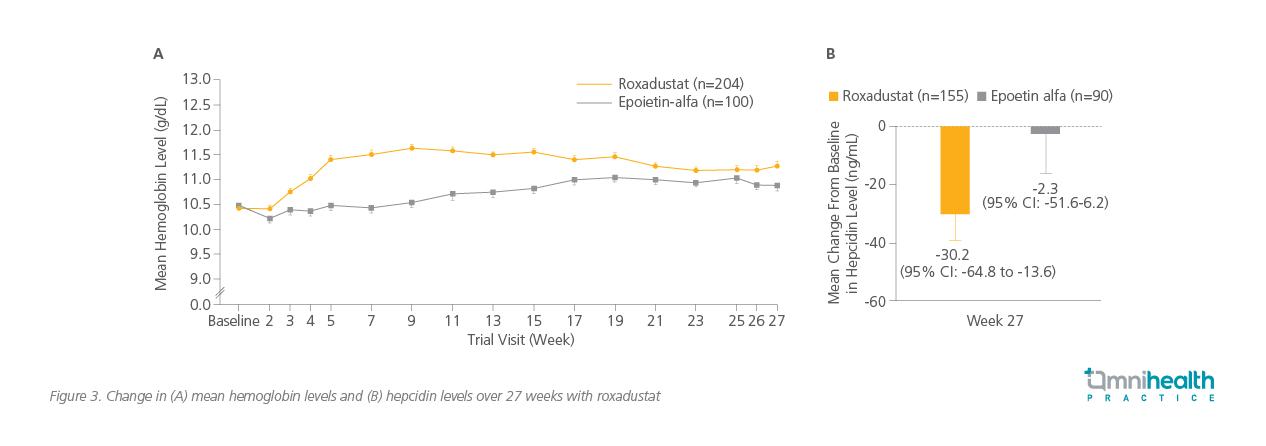
In study 806, 305 Chinese individuals with CKD receiving dialysis and epoietin-alfa were randomly assigned to transition to roxadustat or continue with epoietin-alfa to manage their anemia.7 After a period of 26 weeks, orally administered roxadustat was shown to be comparable to injectable epoietin-alfa.7 In individuals showing high C-reactive protein levels, hemoglobin response in those given roxadustat remained unimpacted, whereas those receiving epoetin-alfa experienced diminished hemoglobin response.7 The reduction in hepcidin levels linked to roxadustat, which lead to better utilization of the body's iron reserves, could have played a role in these results (figure 3).7
Conclusion
The clinical strategy for managing CKD must shift from a reactive, complication-driven model to a proactive, organ-preserving paradigm.4-7 Clinicians must seize the “golden window” by actively screening for albuminuria and deploying foundational, disease-modifying therapies like SGLT2is (dapagliflozin) at the earliest possible stage, long before eGFR permanently declines.8 Real-world evidence now supports that these benefits are robust across varying degrees of albuminuria.1 Furthermore, when downstream consequences like anemia inevitably arise, advanced targeted therapies like HIF-PHIs (roxadustat) allow clinicians to manage complications safely and physiologically.7 Through early detection and modern pharmacology, the tools are available to offer better outcomes for patients facing CKD.