CONFERENCE UPDATE: ACC 2026
Clopidogrel outperforms aspirin in reducing thrombotic and bleeding risk in chronic maintenance phase post-PCI with DES: 10-year HOST-EXAM findings


STUDY DESIGN
Current guidelines recommend indefinite single antiplatelet therapy (SAPT) following 6-12 months of dual antiplatelet therapy (DAPT) after percutaneous coronary intervention (PCI).1 Aspirin remains the most widely used standard antiplatelet agent, while clopidogrel is recommended as an alternative strategy.1 Previous trials have suggested that clopidogrel may offer potential benefits in patients with atherosclerotic vascular disease.1 However, no study has definitively established the optimal antiplatelet agent during the chronic maintenance phase after PCI with drug-eluting stents (DES).1
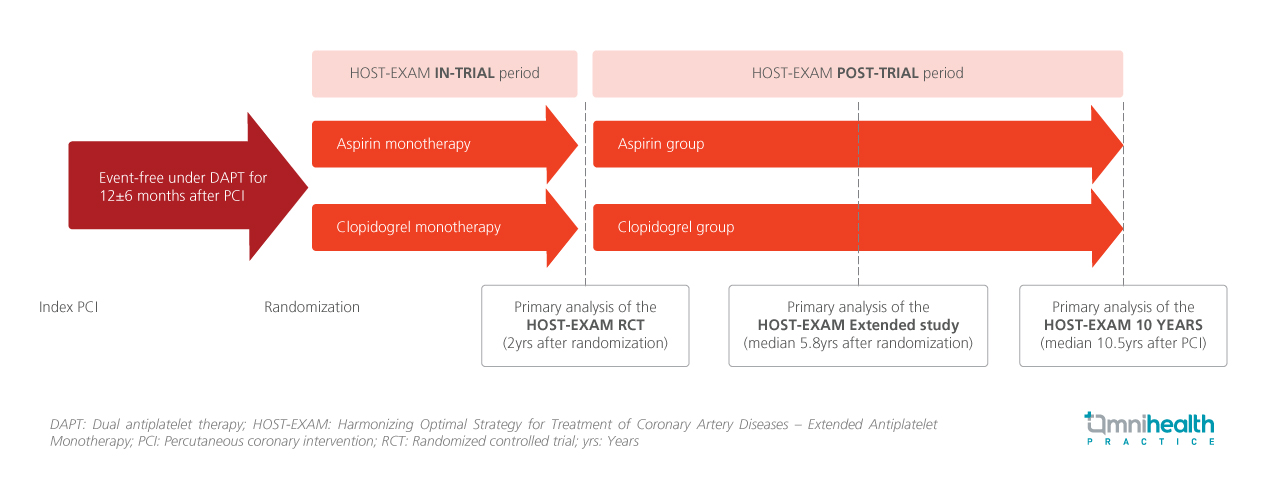
The Harmonizing Optimal Strategy for Treatment of Coronary Artery Diseases – Extended Antiplatelet Monotherapy (HOST-EXAM) trial is a prospective, randomized, open-label, multicenter study designed to evaluate the comparative efficacy and safety of aspirin vs. clopidogrel monotherapy in this setting.1 Eligible patients were required to be ≥20 years of age, to have maintained DAPT for at least 12±6 months after PCI with DES, to have no history of clinical events following PCI prior to enrollment, and to provide written informed consent.1 A total of 5,438 patients were successfully randomized 1:1 to receive clopidogrel monotherapy or aspirin monotherapy.1 Baseline characteristics were well-balanced between the treatment groups, including age, demographics, comorbidities, clinical indications, antiplatelet regimen at the time of randomization, and angiographic and procedural characteristics.1
The primary analysis of the HOST-EXAM randomized controlled trial at 2 years after randomization demonstrated that clopidogrel monotherapy was superior to aspirin in reducing clinical events in the intention-to-treat (ITT) population.1 The present analysis extends follow-up to a median of 10.5 years in the ITT population.1
The primary endpoint was patient-oriented composite outcome (POCO), defined as all-cause death, nonfatal myocardial infarction (MI), stroke, readmission due to acute coronary syndrome (ACS), and major bleeding (Bleeding Academic Research Consortium [BARC] ≥3).1 Key secondary endpoints included the thrombotic composite outcome, defined as cardiac death, nonfatal MI, ischemic stroke, readmission due to ACS, and stent thrombosis, as well as any bleeding events (BARC ≥2).1
FINDINGS
|
Primary endpoint: |
|
|
Secondary endpoints: |
|
“Clopidogrel may be considered the preferred agent for long-term antiplatelet monotherapy after PCI, given its consistent benefit in reducing both thrombotic composite endpoints and bleeding risk during the chronic maintenance phase.”
Dr. Hyo-Soo Kim
Seoul National University Hospital, South Korea