FEATURES
Redefining the cure: 7-year data shows lasting survival advantage with A+AVD in advanced cHL


For three decades, the doxorubicin, bleomycin, vinblastine, and dacarbazine (ABVD) regimen has served as the frontline standard of care for patients with advanced classical Hodgkin lymphoma (cHL).1,2 While this disease is relatively curable, a notable proportion of patients still face relapses or refractory disease.3 Furthermore, because cHL predominantly affects young adults who have long life expectancies, the enduring toxicities of traditional treatments, particularly bleomycin-induced lung fibrosis, pose a significant threat to their long-term quality of life.3,4 Addressing these critical unmet needs requires a shift toward more targeted, tolerable, and effective therapies.1 In a recent interview with Omnihealth Practice, Dr. David Chao shared the recent 7-year update from the landmark phase 3 ECHELON-1 trial, highlighting a step forward in this paradigm.2 By replacing bleomycin with the CD30-directed antibody-drug conjugate brentuximab vedotin*, clinicians can mitigate severe pulmonary risks while achieving superior, sustained overall survival (OS) and progression-free survival (PFS), firmly establishing a new standard of care for advanced cHL.1,2
Understanding cHL: A disease of the young
To fully appreciate the impact of new therapeutic regimens, it is essential to understand the clinical landscape of Hodgkin lymphoma (HL). HL is a rare monoclonal lymphoid neoplasm that accounts for approximately 15% of all newly diagnosed lymphoma cases.3 The disease is highly distinguished by its bimodal age distribution.3 The first and most prominent incidence peak occurs in adolescents and young adults between the ages of 15 and 40 years, while a second peak is observed in adults older than 55 years.3 The average age at diagnosis is 39 years, and it stands as the most common childhood cancer in the 15-to-19-year-old age demographic.3
cHL is characterized by the presence of unique neoplastic cells known as Reed-Sternberg (RS) cells and mononuclear Hodgkin cells.3 Unlike many other cancers, the malignant cells are scattered and intermixed within a dense, reactive background of non-neoplastic inflammatory cells, including T cells, B cells, natural killer cells, and macrophages.3 A defining molecular hallmark of these malignant cells is their high expression of the CD30 cell surface antigen.3 This specific biomarker profile not only aids in the pathological diagnosis of the disease but also serves as a prime target for modern precision medicine.3
Redefining the standard of care: Addressing unmet needs in advanced cHL
The standard-of-care for the first-line treatment of advanced-stage cHL has been the ABVD regimen, consisting of doxorubicin, bleomycin, vinblastine, and dacarbazine.1,2 While this traditional approach has served as a foundational pillar in hematology oncology, it is not without significant limitations.1 A notable proportion of patients with stage III or IV cHL either experience disease relapse or exhibit primary refractory responses to ABVD.1 Furthermore, the toxicity profile of ABVD remains a critical concern for oncologists, particularly regarding bleomycin-induced pulmonary toxicity.4 In a recent interview discussing the evolving landscape of cHL treatment, Dr. Chao provided invaluable clinical insights into the realities faced by patients. “Although HL itself is a relatively easy-to-cure disease, there is still a portion of patients who will relapse.“ Dr. Chao further emphasized, “In that group of relapsed patients, if they use ABVD, I think a portion will have significant toxicity. What we are relatively more concerned about is the bleomycin lung toxicity.“
In a retrospective study analyzing bleomycin-induced lung toxicity (BLT) in the positron emission tomography (PET) era, researchers found that out of 124 patients with HL treated with bleomycin protocols, 14.5% experienced BLT.4 Of those who developed this pulmonary toxicity, nearly 28% died due to respiratory distress secondary to the lung injury.4 The study highlighted that the use of the ABVD regimen, which delivers a higher cumulative dose of bleomycin, was a statistically significant independent risk factor for BLT.4 Dr. Chao highlighted that “unlike some other cancers, where it's more common the older you get, HL is actually a young cancer. Therefore, many patients will live with the side effects of the treatment for a very significant period of time.”3,5 Because the expected cure rate is high, treatment sequelae can impact a patient for decades. Dr. Chao highlights the clinical danger of traditional regimens: “If they are cured at 30, assuming a normal lifespan of 80, they have to live with those side effects for 50 years. If they have bleomycin-induced fibrosis, their quality of life is affected for decades. So I think this bleomycin-free aspect, besides the better tolerability at the moment they are carrying on with the treatment, is also about many years down the line.“
Although various treatment approaches, including PET-adapted strategies and escalated BEACOPP-based regimens (bleomycin, etoposide, doxorubicin, cyclophosphamide, vincristine, procarbazine, and prednisone), have successfully improved disease control or tolerability when compared to ABVD, none of these alternatives have demonstrated a meaningful OS advantage.1 To address these gaps, modern oncology has shifted toward targeted therapies such as brentuximab vedotin.6 As an antibody-drug conjugate, it selectively targets the CD30 antigen, which is characteristically expressed on the surface of HL cells.6 Dr. Chao explains the clinical significance of this targeted mechanism: “CD30 itself is rarely expressed in other normal cells. Brentuximab vedotin will direct the therapy straight to the tumor cells, minimizing damage to healthy tissues.“ By combining brentuximab vedotin with doxorubicin, vinblastine, and dacarbazine (the A+AVD regimen), clinicians can update the frontline treatment paradigm to enhance tumor-specific cytotoxicity.1,6
Going beyond the curve: Sustained 7-year efficacy and survival outcomes
The phase 3 ECHELON-1 study is an open-label, randomized controlled trial that evaluated the efficacy and safety of A+AVD vs. ABVD in patients with previously untreated stage III or IV cHL.2 A total of 1,334 patients were randomized 1:1 to receive up to 6 cycles of either A+AVD (n=664) or ABVD (n=670), administered via intravenous infusion on days 1 and 15 of each cycle.2 The primary endpoint was modified PFS per independent review facility.2 At a median follow-up of 89.3 months (approximately 7 years), the updated analyses found the clinical benefits of A+AVD to be robust, sustained, and translated to a significant survival advantage.2
The patient demographics reflected the diverse reality of advanced cHL: 58% of the cohort were men, 64% presented with stage IV disease, 62% had extranodal involvement, and 59% suffered from debilitating B symptoms.1 Randomization was stratified based on geographic region and International Prognostic Score (IPS) risk groups to ensure balanced and unbiased comparisons.1 A mandatory PET scan was conducted at the end of the second cycle (PET2) to monitor metabolic responses.1
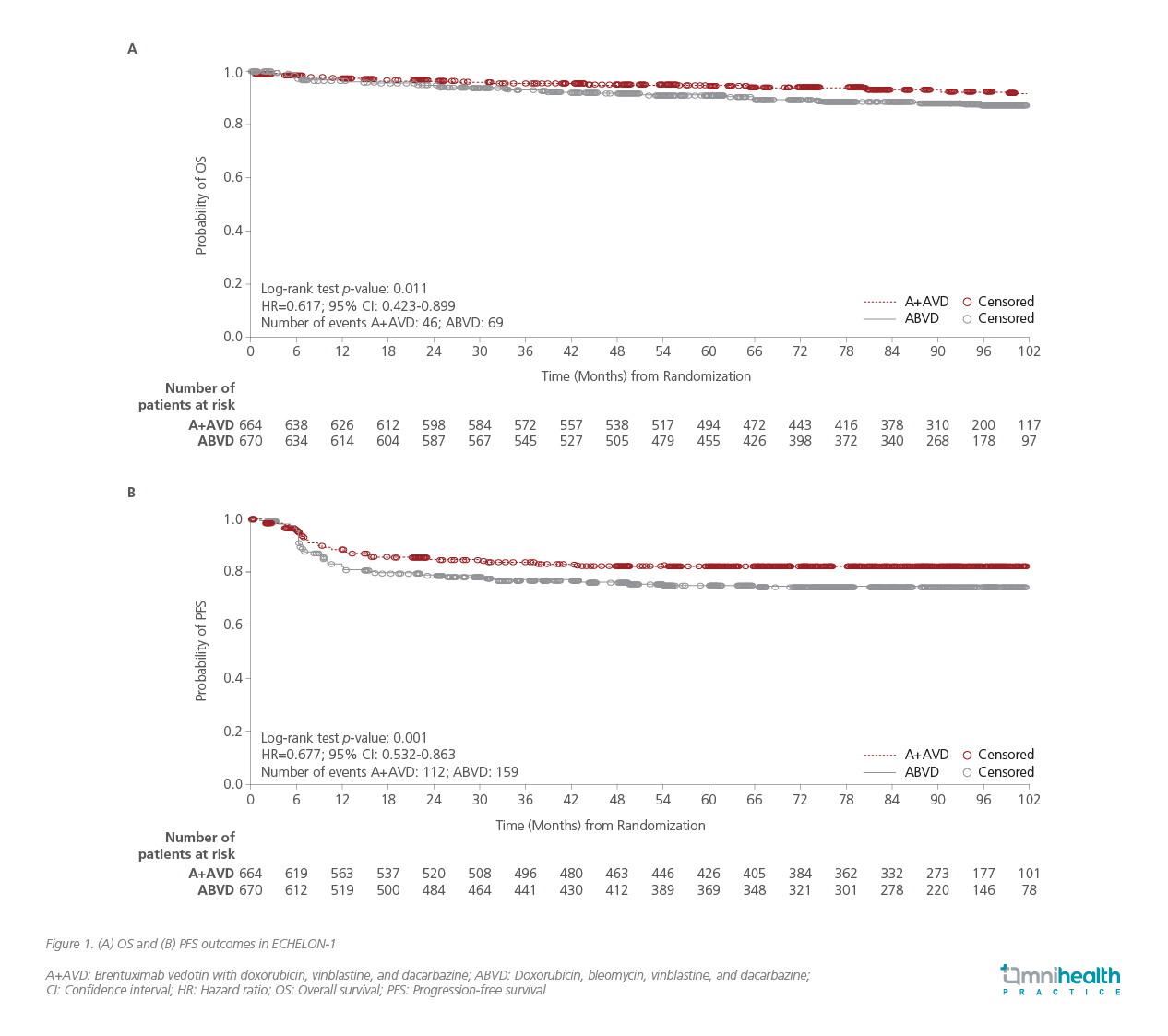
The 7-year OS rate for patients receiving A+AVD was 93.5%, compared to 88.8% for those receiving ABVD.2 This represents a nearly 40% reduction in the risk of death (HR=0.617; 95% CI: 0.423-0.899; p=0.011).2 Notably, the median OS has not yet been reached in either treatment arm (figure 1A).2 Reflecting on these remarkable long-term findings, Dr. Chao stated, “The 7-year OS tells us even more that it is a superior treatment. Even if we disregard things like tolerability and the side effect profile, it is still a more efficacious treatment.“ The PFS data further solidify the superiority of the targeted regimen.2 Consistent with earlier analyses, the 7-year PFS rate was 82.3% for the A+AVD arm vs. 74.5% for the ABVD arm (HR=0.677; 95% CI: 0.532-0.863; p=0.001) (figure 1B).2
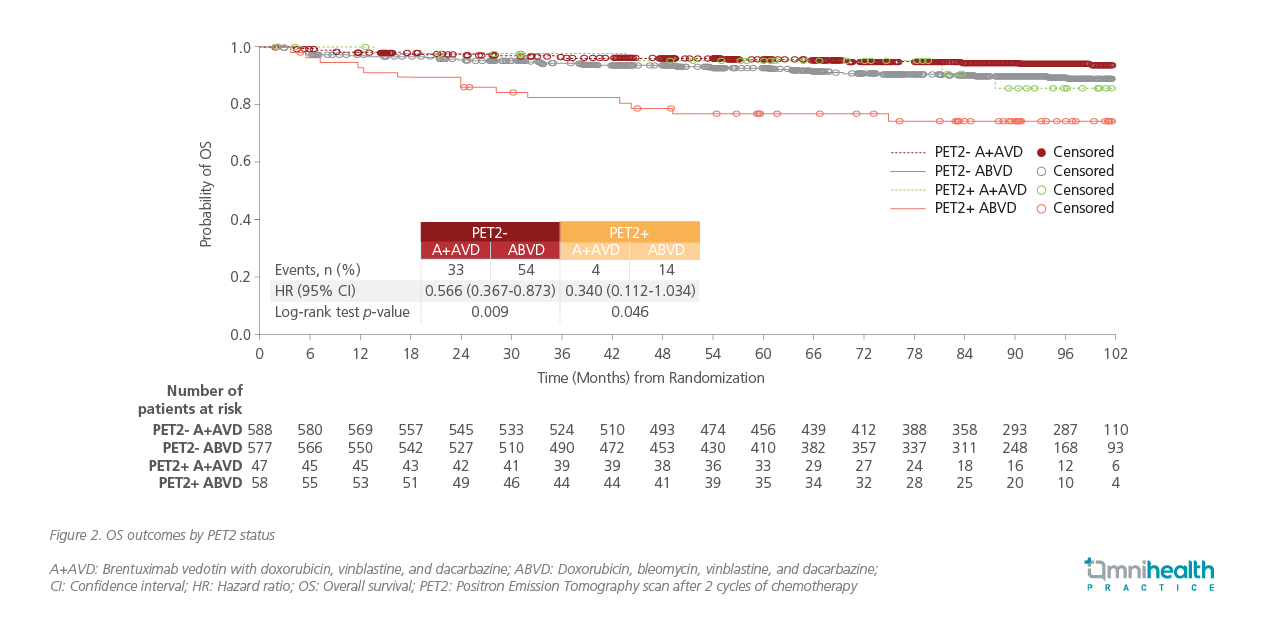
Importantly, the OS benefit of A+AVD was generally consistent across various patient subgroups, including those aged under 40 years and those presenting with stage IV disease.2 Furthermore, the survival advantage persisted regardless of interim PET scan results after cycle 2.2 Improved 7-year OS rates were observed with A+AVD compared to ABVD in both PET2-negative patients (95.0% vs. 90.2%; HR=0.57) and PET2-positive patients (90.7% vs. 74.0%; HR=0.34) (figure 2).2
Manageable safety profile shown in ECHELON-1
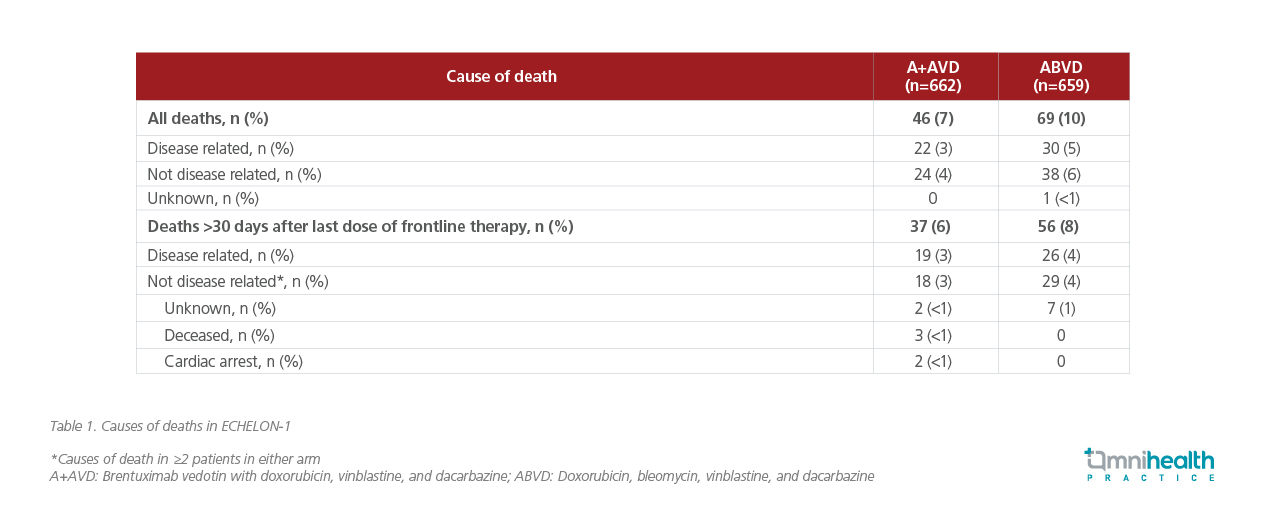
The 7-year safety data from ECHELON-1 support the use of a bleomycin-free approach. The analysis revealed fewer overall deaths in the A+AVD arm (46 deaths, representing 7% of the cohort) compared to the ABVD arm (69 deaths, representing 10% of the cohort) (table 1).2 Crucially, deaths that were not disease-related were markedly lower with A+AVD at 4% compared with ABVD 6%.2 In the earlier 6-year follow-up of the ECHELON-1 study, only one patient receiving A+AVD died from respiratory failure, whereas out of the 7 patients who died in the ABVD arm, 6 died from respiratory complications, including 3 from pneumonia, 1 from pulmonary toxicity, 1 from pneumonitis, and 1 from respiratory disorder.1
While A+AVD mitigates pulmonary risks, the regimen has been associated with a higher initial incidence of neutropenia and febrile neutropenia compared to ABVD.1,6 At the 2-year follow-up, neutropenia occurred in 58% of patients treated with A+AVD vs. 45% with ABVD, with febrile neutropenia reported in 19% and 8%, respectively.6
Beyond mortality, the long-term safety profiles regarding secondary malignancies and reproductive health are paramount for this younger demographic.2 The rate of second malignancies was comparable between the two groups: 33 instances (5%) in patients receiving A+AVD and 39 instances (6%) in those receiving ABVD.2 Dr. Chao corroborates these findings, stating, “For secondary cancers, I can conclude that it is a relatively safe option, and won't significantly increase the risk of a secondary cancer.“
Other safety outcomes were also reported at the 7-year follow-up. Peripheral neuropathy (PN), a known adverse event associated with microtubule-disrupting agents like brentuximab vedotin, showed highly encouraging resolution rates over time.2 Treatment-emergent PN resolved or improved in 86% of patients receiving A+AVD and 87% of those receiving ABVD.2 The median time to resolution was 16 weeks with A+AVD and 10 weeks with ABVD, while the median time to improvement was 42 weeks and 19 weeks, respectively.2 Regarding fertility and family planning, pregnancies were successfully reported in both arms.2 Among these, one or more live births were reported in 91% (84/92) of patients and their partners treated with A+AVD, and 81% (59/73) of those treated with ABVD, with no stillbirths reported in either treatment arm.2
Forging a new path: Establishing A+AVD as a category 1 strategy
The cumulative clinical evidence from the 7-year ECHELON-1 update shifts the treatment paradigm for advanced cHL.2 The sustained OS and PFS advantages, paired with a favorable long term safety profile, establish a compelling case for adopting brentuximab vedotin in the frontline setting.2 Reflecting on the integration of A+AVD into routine clinical practice, Dr. Chao affirmed, “Its advantage has made it a new standard of care. I personally also feel it's a safe and effective combination. For high-risk populations, the clinical direction is clear. We will consider this treatment regimen first, as directed by our internal guidelines.“
Conclusion
Extended data from the ECHELON-1 trial support A+AVD as new regimen for advanced cHL.2 While traditional chemotherapy is highly curative, it carries a known risk of severe pulmonary toxicity.4 As Dr. Chao notes, because cHL primarily affects young adults, these enduring side effects can impact survivors for decades.3 A+AVD addresses this by replacing bleomycin with a targeted agent, minimizing damage to healthy tissue.1 Dr. Chao highlights that this regimen eliminates the risk of bleomycin-induced lung fibrosis while delivering a sustained survival advantage.1,2 Additionally, A+AVD maintains a manageable long-term safety profile, showing no increased risk of secondary malignancies, a numerically higher pregnancy rate and a higher rate of live births.2 By balancing disease eradication with long-term tolerability, A+AVD provides a new therapeutic option for patients with cHL.2
*Indication: A+AVD is approved for the treatment of adult patients with previously untreated CD30+ Stage III or IV Hodgkin lymphoma7
Abbreviated Prescribing Information (EU-OCT2023 - HK-JAN2024)
ADCETRIS 50 mg powder for concentrate for solution for infusion.
Active Ingredient: Brentuximab vedotin Indication: Treatment of adult patients with previously untreated CD30+ Stage III or IV Hodgkin lymphoma (HL) in combination with doxorubicin, vinblastine and dacarbazine (AVD); Treatment of adult patients with CD30+ HL at increased risk of relapse or progression following ASCT; Treatment of adult patients with relapsed or refractory CD30+ Hodgkin lymphoma (HL) following autologous stem cell transplant (ASCT) or at least 2 prior therapies when ASCT or multi-agent chemotherapy is not a treatment option; In combination with cyclophosphamide, doxorubicin and prednisone (CHP) for the treatment of adult patients with previously untreated systemic anaplastic large cell lymphoma (sALCL); Treatment of adult patients with relapsed or refractory sALCL; Treatment of adult patients with CD30+ cutaneous T-cell lymphoma (CTCL) after at least 1 prior systemic therapy. Dose & Administration: Previously untreated HL: In combination with chemotherapy (doxorubicin [A], vinblastine [V] and dacarbazine [D] [AVD]), 1.2mg/kg IV infusion over 30 min on days 1 and 15 of each 28-day cycle for 6 cycles. HL at increased risk of relapse or progression following ASCT & CTCL after at least 1 prior systemic therapy: 1.8 mg/kg IV infusion over 30 min every 3 wk up to max of 16 cycles. Previously untreated sALCL: In combination with chemotherapy (cyclophosphamide [C], doxorubicin [H] and prednisone [P] [CHP]), 1.8 mg/kg IV infusion over 30 minutes every 3 weeks for 6 to 8 cycles. Relapsed or refractory HL & relapsed or refractory sALCL: 1.8 mg/kg IV infusion over 30 min every 3 wk, patients who achieve stable disease or better should receive a minimum of 8 cycles and up to a max of 16 cycles. Contraindications: Hypersensitivity to brentuximab vedotin or the excipients. Combined use of brentuximab & bleomycin. Special Population: Closely monitor for new or worsening neurological, cognitive or behavioural signs or symptoms suggestive of progressive multifocal leukoencephalopathy (PML); new or worsening abdominal pain suggestive of acute pancreatitis; new or worsening pulmonary symptoms; emergence of serious & opportunistic infections; immediate & delayed infusion-related reactions. Discontinue use if anaphylaxis & Stevens-Johnson syndrome occurs. Patient w/rapidly proliferating tumour & high tumour burden at risk of tumour lysis syndrome. Monitor for symptoms of neuropathy. Patient experiencing new or worsening peripheral neuropathy may require delay & dose reduction or discontinuation of treatment. Monitor CBC prior to therapy; serum glucose. Patient w/ an elevated BMI w/ or w/o history of DM; renal & hepatic impairment; on controlled Na-diet. Women of childbearing potential should use 2 methods of contraception during & until 6 months after therapy. Men should not father a child during therapy & for up to 6 mth after last dose. May affect ability to drive or operate machinery. Children & elderly. Adverse Reactions: Infection, sepsis/septic shock, upper resp tract infection, herpes zoster, pneumonia, herpes simplex, oral candidiasis; neutropenia, anaemia, febrile neutropenia, thrombocytopenia; Decreased appetite, hyperglycaemia; peripheral sensory neuropathy, peripheral motor neuropathy, dizziness; cough, dyspnoea; diarrhoea, nausea, vomiting, constipation, abdominal pain, stomatitis; elevation of ALT/AST; alopecia, pruritus, rash; myalgia, arthralgia, back pain, bone pain; fatigue, pyrexia, infusion-related reactions, chills. For detailed information, please consult full prescribing information.

Takeda Pharmaceuticals (HK) Ltd
P.O.box 47256
Morrison Hill Post Office, Hong Kong
Tel: 2133 9800 Fax: 2856 2728
C-ANPROM/HK/ADCE/0015 (09/2026)