INDUSTRY ESSENTIALS
Optimizing management of locally advanced and mRCC: HKUA-HKSUO joint expert consensus


Since the publication of the previous Hong Kong Urological Association (HKUA) and Hong Kong Society of Uro-Oncology (HKSUO) joint consensus on the management of locally advanced and metastatic renal cell carcinoma (mRCC) in 2022, the treatment landscape has continued to evolve.1 This change has been driven by the increasing evidence supporting the use of immuno-oncology (IO)-based combinations and adjuvant immunotherapy, as well as the development of new systemic therapies.1 At the HKSUO Annual Scientific Meeting 2026, Dr. Brian Ho, Honorary Consultant in Urology at Queen Mary Hospital, shared highlights from the 2025 consensus update, which aims to provide focused, practice-oriented guidance on selected decision points in mRCC, integrating current evidence and expert clinical judgment to support multidisciplinary management within the Hong Kong setting.1
A multidisciplinary panel of urologists and clinical oncologists with extensive experience in renal cell carcinoma (RCC) management was convened to review current evidence and formulate recommendations.1 Key clinical questions within the predefined scope were discussed and voted upon based on panelists’ expert opinions regarding best current clinical practice.1 Consensus statements were developed following structured discussion and anonymous voting using a five-point Likert scale.1 A statement achieving ≥80% combined agreement of ‘accept completely’ and ‘accept with some reservation’ was considered accepted by the panel as consensus.1
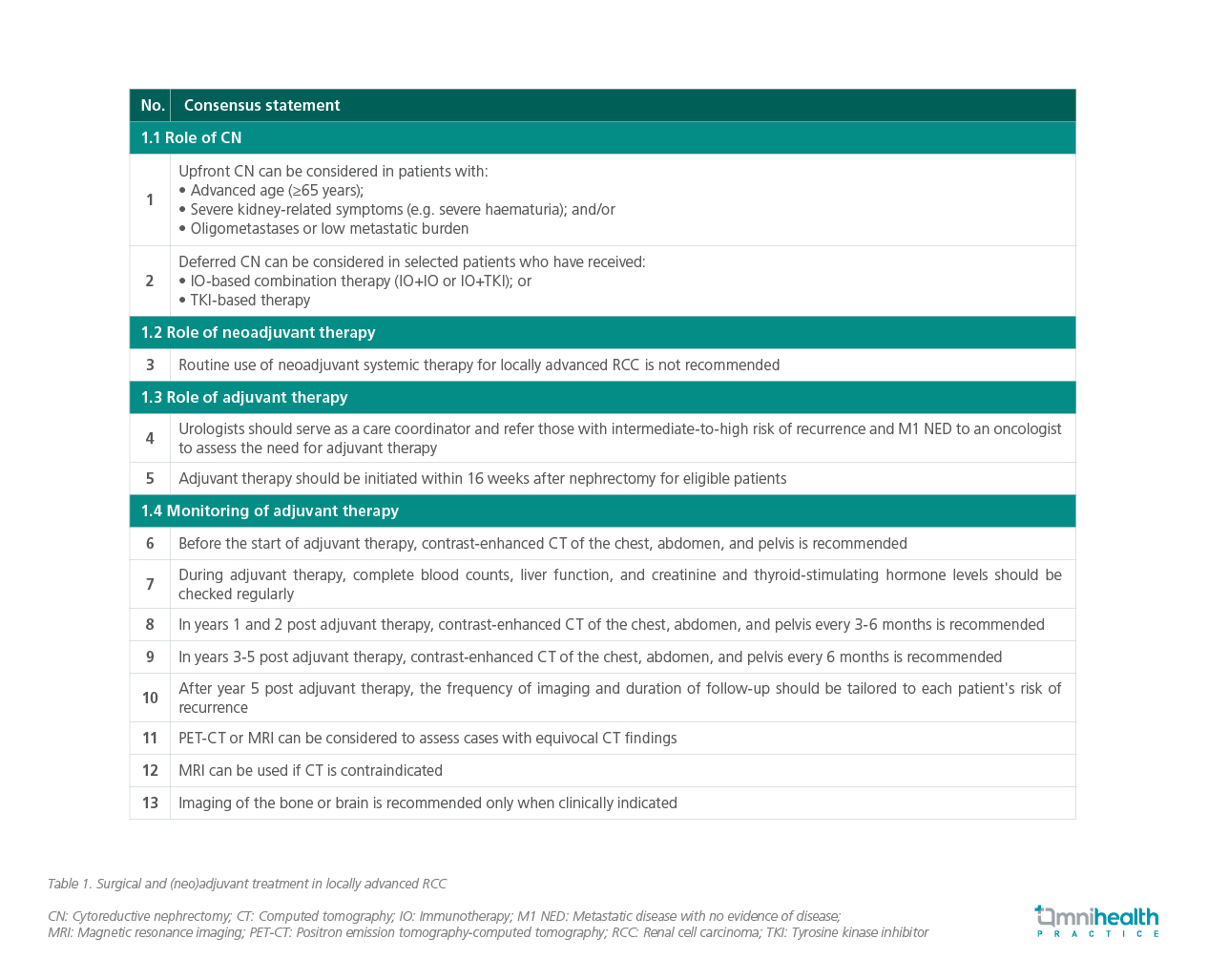
In developing these statements, the panel considered evolving evidence across the perioperative and metastatic RCC treatment continuum, recognizing that the benefits of surgical and systemic interventions are highly dependent on patient selection, disease biology, and timing of therapy.1 While randomized data from the tyrosine kinase inhibitor (TKI) era do not support routine upfront cytoreductive nephrectomy, the panel acknowledged the emerging retrospective evidence from the IO era in carefully selected patients, alongside increasing interest in deferred surgical approaches following systemic therapy.1 Similarly, despite exploratory data on neoadjuvant strategies, limited survival evidence, and concerns regarding treatment-related toxicity and surgical impact, preclude routine use at present.1
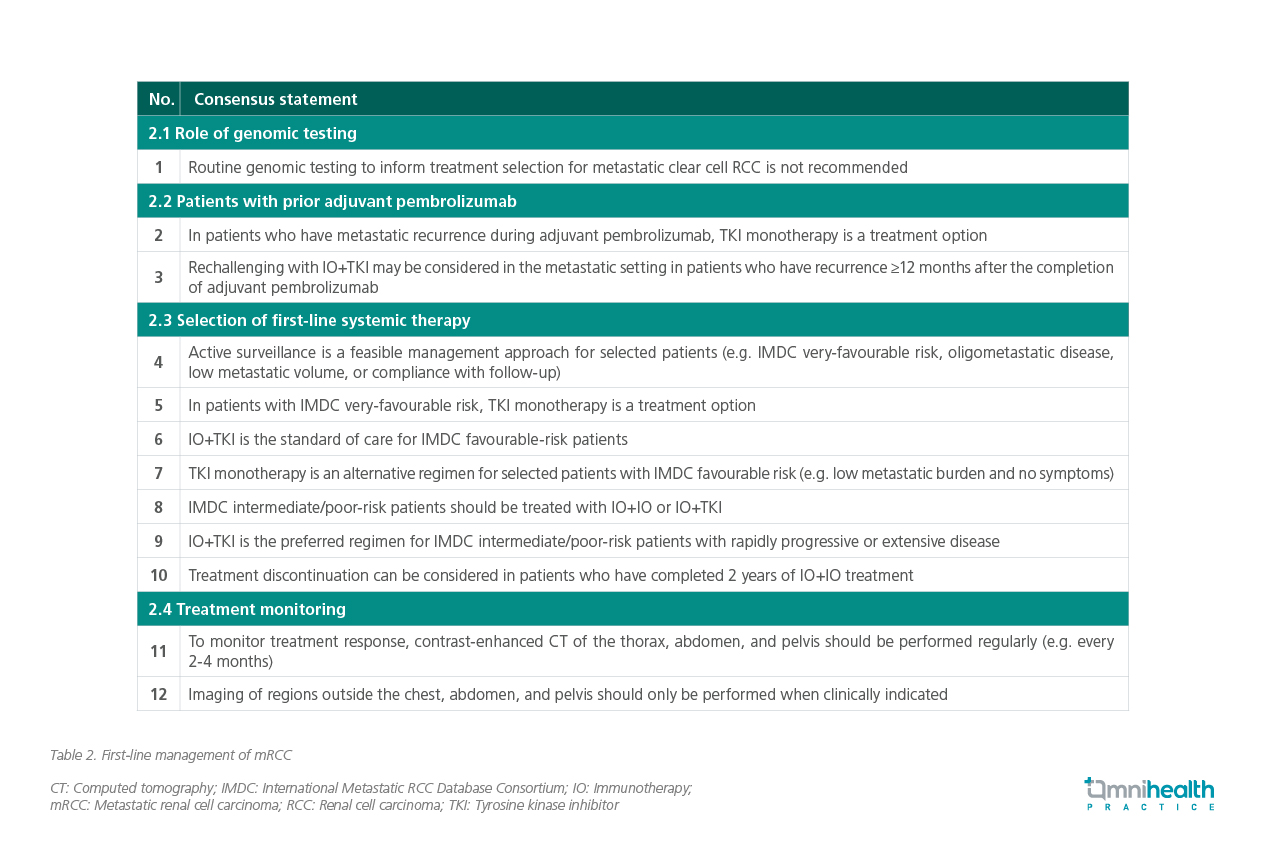
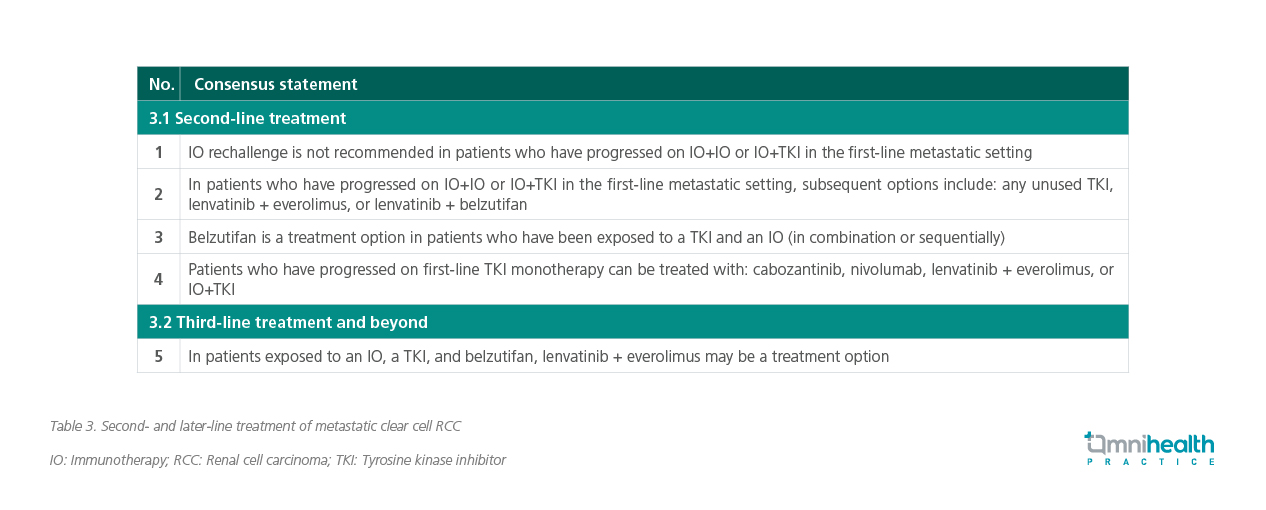
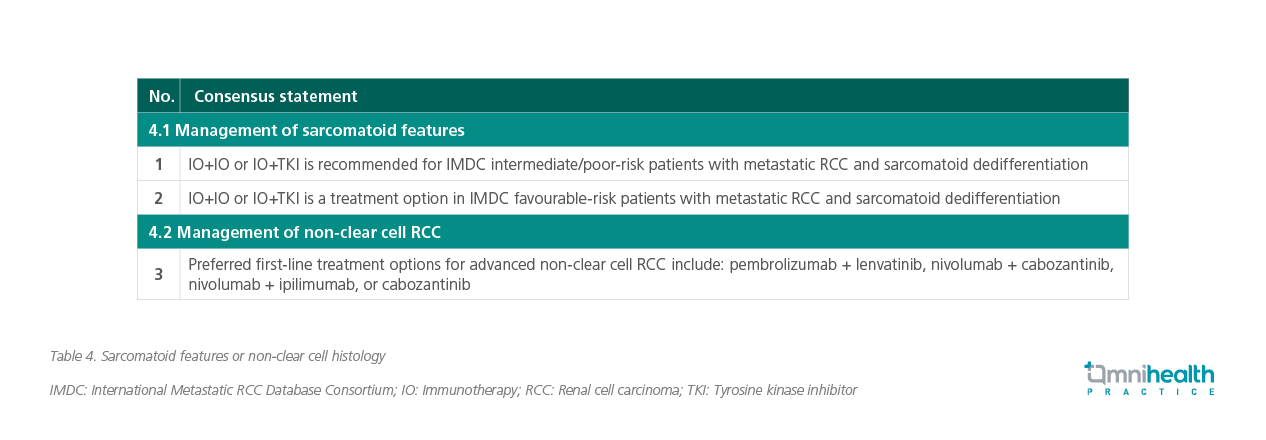
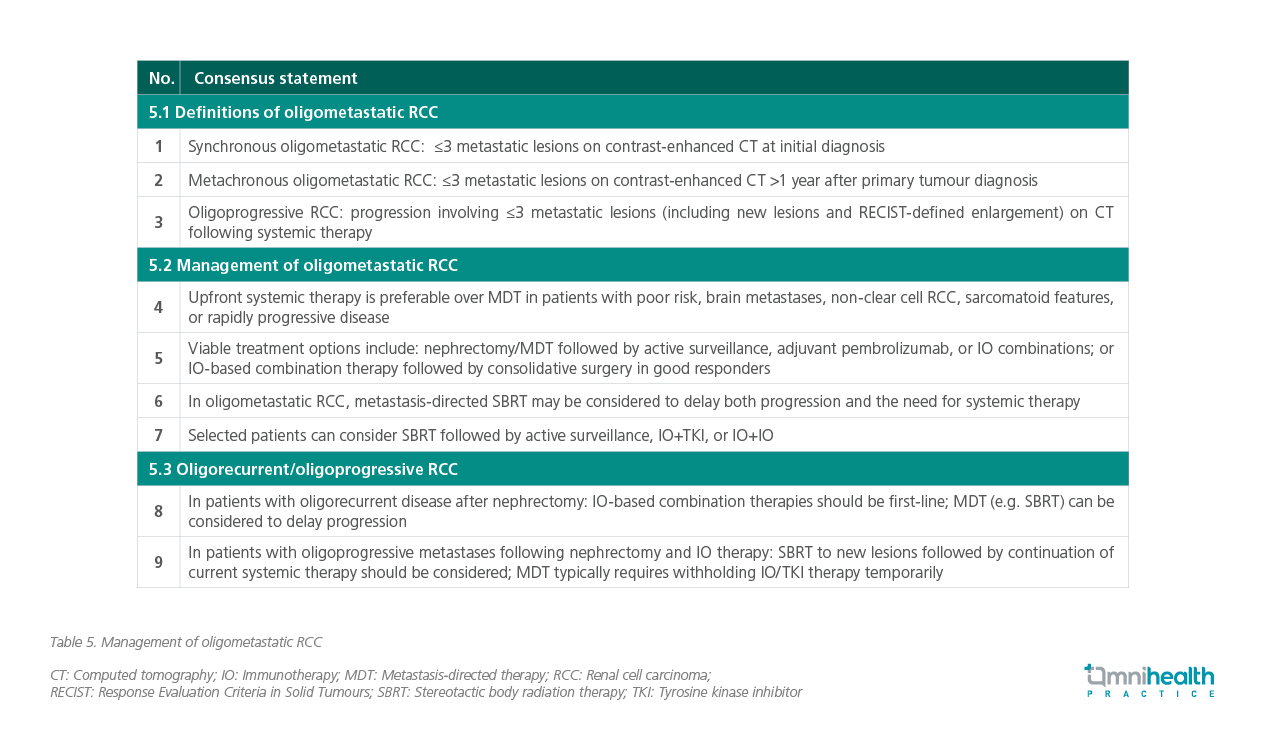
In contrast, the panel recognized the robust phase 3 evidence supporting adjuvant therapy in selected high-risk populations, highlighting that timely identification and referral are critical to optimizing outcomes.1 The panel also considered areas of evolving practice, including the limited role of routine genomic testing, treatment sequencing following prior adjuvant immunotherapy, and the preferential use of IO-based combinations in biologically aggressive RCC with sarcomatoid de-differentiation, as well as in the less-represented non-clear cell RCC subtypes.1 The accepted consensus statements reflecting these considerations are summarized in tables 1-5.1,2