EXPERT INISIGHT
Beyond a new option for LGS: Leveraging a unique dual mechanism of serotonergic and sigma-1 modulation


Lennox-Gastaut syndrome (LGS) is a severe developmental and epileptic encephalopathy (DEE) characterized by multiple seizure types with tonic seizures as mandatory, specific electroencephalogram (EEG) abnormalities, and progressive cognitive impairment.1,2 Because these features vary and evolve over time, LGS diagnosis is frequently delayed or missed.1,2 In an interview with Omnihealth Practice, Dr. Fong, Ka-Yeung Jason, emphasized the need for comprehensive assessment, regular review, and LGS-specific treatments. Fenfluramine is an add-on therapy indicated for the treatment of seizures associated with LGS in patients aged ≥2 years.3 Through a unique dual mechanism involving both serotonergic and sigma-1 receptor pathways, fenfluramine has demonstrated sustained efficacy in reducing drop seizures, including generalized tonic-clonic seizures (GTCS).2-4 Crucially, also in post-hoc analyses, fenfluramine has been associated with improvement in daily executive functioning (EF), even when treatment is initiated in adulthood.5 By embracing these advanced therapies, the medical community is moving beyond seizure reduction, shifting toward comprehensive strategies that enhance the quality of life for patients and caregivers.5,6
Unraveling the diagnostic and management maze of LGS
LGS typically manifests before 8 years of age, and it persists throughout adolescence and into adulthood.7 Characterized by multiple treatment-resistant seizure types and profound cognitive and behavioral impairments, LGS places a long-term, devastating burden on patients, caregivers, and healthcare systems.2,7
Diagnosing the syndrome remains exceptionally challenging for clinicians despite the definition provided by the International League Against Epilepsy (ILAE) with clinical features including multiple types of drug-resistant seizures with onset prior to 18 years (one of which must include tonic); cognitive and often behavioral impairments; and diffuse slow spike-and-wave (SSW) and generalized paroxysmal fast activity (GPFA) on EEG.7 The defining seizure types and EEG characteristics are not pathognomonic when observed in isolation, and they frequently evolve.7,8 For EEG patterns, while SSW complex may decrease in frequency with age and can even disappear entirely after 16 years of age, GPFA can be identified via sleep/overnight EEG.7 Furthermore, cognitive and behavioral impairments may not be explicitly present at the onset of seizures, complicating early identification.7 Dr. Fong noted that he conducts thorough assessments, including EEGs, for adult patients with childhood-onset epilepsy and uncontrolled seizures to ensure accurate identification.
According to Dr. Fong’s experience, many LGS patients face severe complications, including intellectual disability, learning disabilities, behavioral disturbances, and status epilepticus. “For patients with pre-existing learning disabilities, their neurodevelopment is highly vulnerable to the cumulative effects of polypharmacy. If the cognitive side effects are substantial, it can severely compromise patients’ ability to learn, develop, and maintain independence. Therefore, we must be mindful of the cognitive profiles of antiseizure medications when making treatment decision,“ Dr. Fong reminded. He also added that these considerations should be proactively discussed with families and caregivers, alongside the need for seizure control, particularly in patients with frequent generalized tonic-clonic seizures (GTCS), a clinical risk factor of Sudden Unexpected Death in Epilepsy (SUDEP).2
Seizures associated with LGS are highly refractory, and the treatment goal should be optimal seizure control, while individualizing treatment across patient’s age and disease stage.9 Current management relies heavily on polytherapy, including broad-spectrum ASMs like sodium valproate (VPA) and lamotrigine (LTG).9 However, the complex interplay of drug-drug interactions and suboptimal seizure control with combination therapy continually underscore the unmet need for novel, sustainable therapeutic later-line options.9
Fenfluramine: A targeted approach for robust seizure reduction
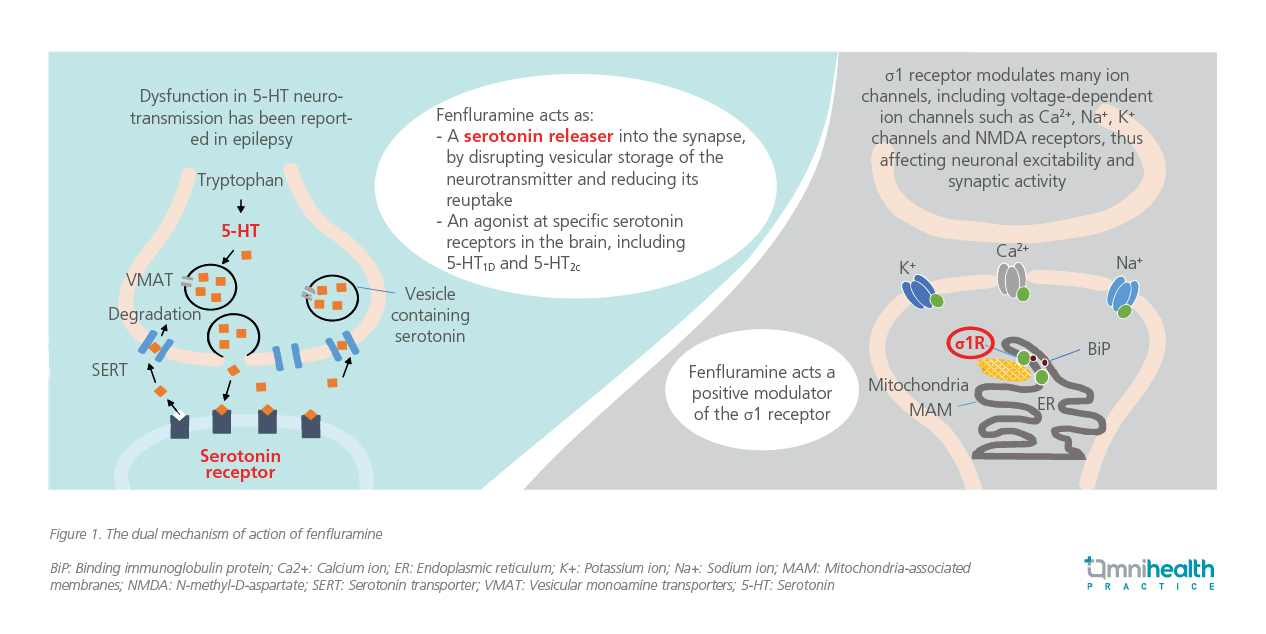
Fenfluramine utilizes a unique dual mechanism of action that actively enhances specific serotonergic receptor activity within the brain while functioning as a positive modulator of sigma-1 receptors (figure 1).4,10-16 By simultaneously engaging these two distinct pathways, fenfluramine may restore the critical balance between gamma-aminobutyric acid (GABA)-mediated inhibition and glutamatergic excitation. Beyond seizure reduction, there could be a role of sigma-1 receptors in mediating pathways involved in learning, memory, and cognitive regulation.13,17 As Dr. Fong highlighted, “Fenfluramine’s distinct, multi-targeted mechanism of action can provide a valuable therapeutic advantage, offering a broader approach to managing LGS, a DEE with highly refractory, difficult-to-treat seizures."
The efficacy of fenfluramine in LGS has been demonstrated in a double-blind, 20-week phase 3 randomized controlled trial (RCT) involving 263 LGS patients aged 2-35 years who experienced ≥2 drop seizures per week during the 4-week baseline.2 In the trial, these patients were randomized 1:1:1 to receive 0.7mg/kg/day or 0.2mg/kg/day fenfluramine, or placebo.2 After 2-week titration, the patients received the randomized dose for 12 additional weeks.2 The study met its primary endpoint, as a median 26.5% reduction in drop seizure frequency among patients in the 0.7mg/kg/day fenfluramine group (n=87), compared to 7.6% for those on placebo (n=87), achieving an estimated median difference from placebo of -19.9% (95% CI: -31.0% to -8.7%; p=0.001).2 In the 0.2mg/kg/day fenfluramine group, the estimated median difference from placebo was -10.5%.2 Furthermore, 25% of patients in the 0.7mg/kg/day fenfluramine group achieved a ≥50% reduction in drop seizure frequency, significantly higher than the 10% response rate in the placebo group (p=0.02).2 Additionally, a significant proportion of patients scored clinically meaningful improvement on the Clinical Global Impression of Improvement (CGI-I) scale in the 0.7mg/kg/day fenfluramine group vs. placebo (p=0.001).2
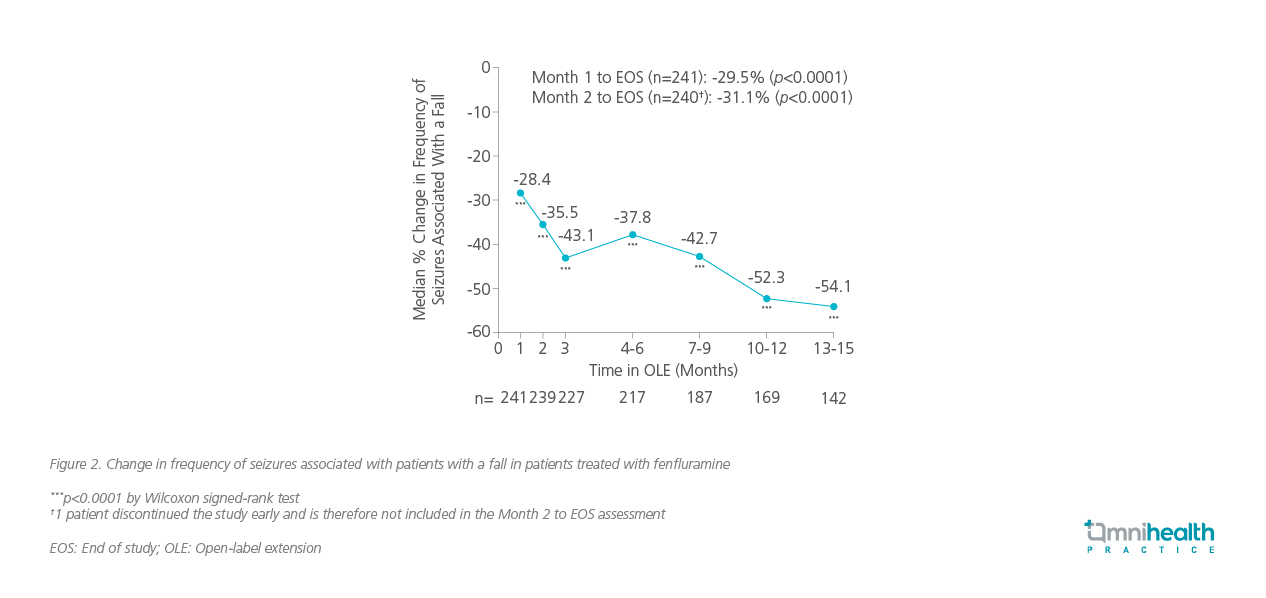
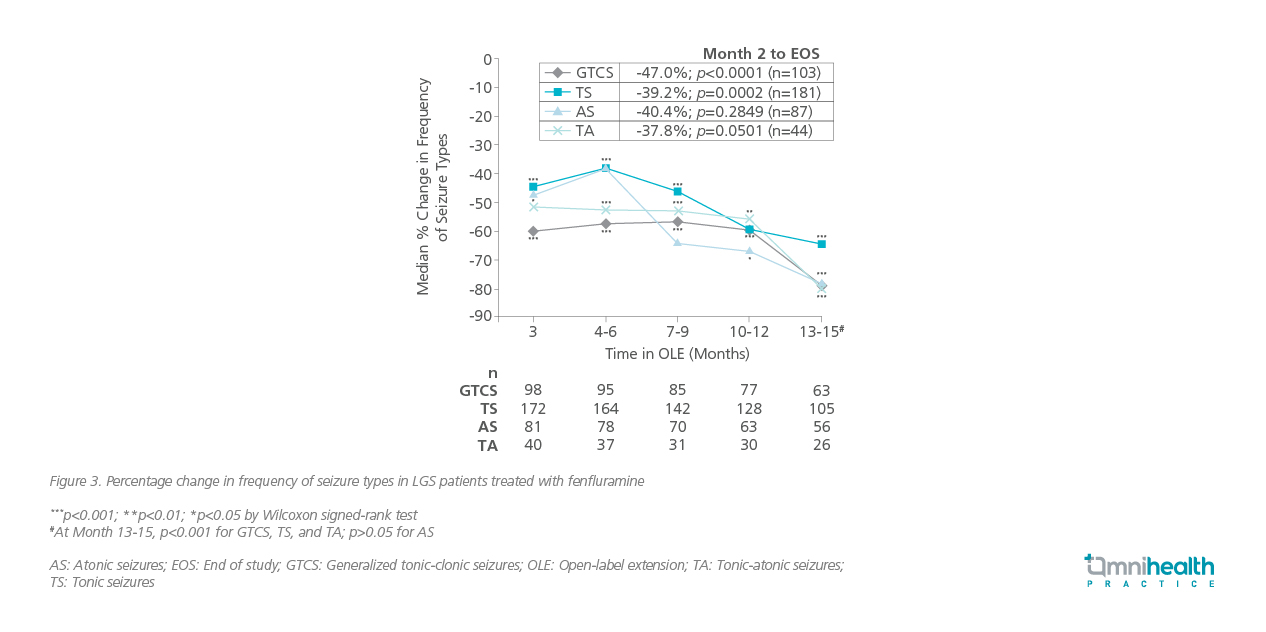
The benefits of fenfluramine extend beyond the RCT data, with a comprehensive final analysis of an open-label extension (OLE) study with a median follow-up of 364 days.2,6 The OLE results confirmed that from month 2 to the end of the study, patients achieved a 31.1% median reduction in seizures associated with a fall (figure 2) with sustained results across different seizure types (figure 3).6 By the final visits in the OLE in all fenfluramine-treated patients, the investigators and caregivers rated CGI-I 57.0% and 59.9% of patients as improved, respectively.6
Beyond seizure control: Enhancing everyday executive function
Dr. Fong reminded that while seizure control remains a key goal in LGS management, lifelong, multidisciplinary, individualized care that extends beyond seizure management remains important. This is because non-seizure outcomes profoundly impact the quality of life for LGS patients and their families. For example, EF, an important non-seizure domain for LGS patients, dictates self-regulatory abilities, encompassing behavior, emotion, and cognitive management.6 Clinical analyses utilizing the Behavior Rating Inventory of Executive Function (BRIEF2 for pediatrics and BRIEF-A for adults) revealed that fenfluramine improves everyday EF domains (figure 4).18
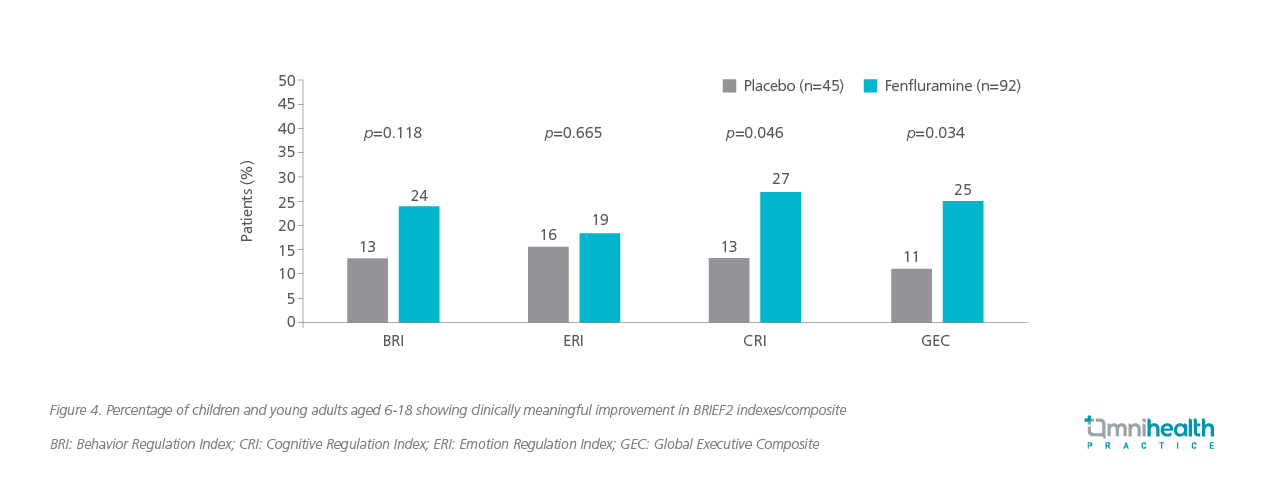
In children and young adults, fenfluramine was associated with clinically meaningful improvement in both the Cognitive Regulation Index (p=0.046) and the Global Executive Composite (p=0.034) compared to placebo.18 Additionally, post-hoc analyses of adult LGS patients demonstrated that fenfluramine generated positive, meaningful enhancements in the Behavioral Regulation Index (p=0.040) and Metacognition Index (p=0.015).5 These improvements in EF may be attributed not only to a reduction in cumulative seizure burden but also to fenfluramine’s direct action on sigma-1 receptor, which plays a role in learning, memory, and neurocognitive regulation.18 Furthermore, the 12-month OLE study demonstrated improvements in patient quality of life scores (QOLCE) alongside significant reductions in parent and caregiver anxiety on the Hospital Anxiety and Depression Scale (HADS).6 Collectively, these findings suggest that fenfluramine may deliver benefits beyond seizure control, improving daily EF, quality of life of LGS patients and their caregiver well-being.5,6,18
A reassuring safety and tolerability profile
Fenfluramine was generally well-tolerated.2 The most frequently reported treatment-emergent adverse events (TEAEs) included decreased appetite (22%), fatigue (13%), somnolence (13%), pyrexia (10%), and diarrhea (10%).2 Weight loss was closely monitored, and the rate was comparable to prior studies. No patients withdrew from the RCT due to weight loss or decreased appetite.2
Notably, the cardiovascular safety of fenfluramine at recommended prescribed doses was consistently supported by monitoring studies.2 Fenfluramine was historically withdrawn from the market in 90s’ as a high-dose (60-120mg) obesity treatment due to associations with valvular heart disease (VHD) and pulmonary arterial hypertension (PAH).19 However, zero cases of VHD or PAH were found by serial Doppler echocardiogram examinations throughout both the 14-week phase 3 RCT and the extended OLE (spanning over 12 months).2,9 In real-world setting (including Hong Kong), routine echocardiograms are needed at baseline, 6 months for the first two years, and annually after 2 years of fenfluramine administration to maintain and track this exemplary safety record.3,9
Building upon these established safety and efficacy data, practical examples can help clarify the criteria for initiating this therapy. Dr. Fong shared a case study to demonstrate the clinical criteria for selecting patients for fenfluramine treatment:
- A 30-year-old adult male patient with severe LGS with daily seizures with drop attacks that resulted in wheelchair dependence
- Not a candidate for surgical intervention or other non-pharmacological therapies
- After combination treatment with pregabalin, cenobamate, and VPA for approximately a year, the patient has shown some response but had developed adverse effects associated with pregabalin
“In this patient case, fenfluramine may be the next step in the management,” noted Dr. Fong.
Conclusion
Dr. Fong concluded that LGS requires a dynamic, highly personalized, and multidisciplinary treatment approach that continually adapts as the patient's phenotype matures. Fenfluramine has emerged as an add-on therapy, offering not only effective reductions in drop seizures but also delivering improvements in everyday EF and caregiver quality of life.2,9,18 Coupled with a robust, reassuring cardiovascular safety profile, fenfluramine represents a new avenue of treatment in the comprehensive management of DEEs such as LGS.2,6,9